

Paris isn’t just about cafés and croissants. Beneath its romantic surface, there’s a thriving, discreet adult scene - and one of its most talked-about corners is the city’s sex clubs. If you’ve heard whispers about Sex Club Paris, you’re not alone. But what’s real? What’s allowed? And is it really for you?
Sex Club Paris isn’t one place - it’s a whole scene
There’s no single venue called "Sex Club Paris." Instead, there are a handful of private, invitation-only clubs scattered across the 11th, 12th, and 18th arrondissements. These aren’t strip bars or brothels. They’re social spaces where consenting adults gather to explore intimacy in a controlled, respectful environment. Most operate under French privacy laws, meaning they don’t advertise publicly. You won’t find them on Google Maps.
Some are membership-based. Others host open nights for newcomers. The vibe ranges from chic lounge with dim lighting and velvet couches to more industrial lofts with themed rooms. What they all share? Strict rules: no photos, no drugs, no coercion. Consent isn’t a suggestion here - it’s the law of the room.
Who actually goes to these clubs?
Don’t picture Hollywood fantasies. The crowd is mostly locals - couples, singles, and polyamorous groups in their 30s to 50s. Many are professionals: architects, writers, teachers, entrepreneurs. They’re not looking for a quick hook-up. They’re looking for connection, novelty, or just a break from routine. Some come once. Others are regulars for years.
Women make up nearly half the attendees, and many arrive with their partners. Solo visitors are welcome too, but they’re expected to respect boundaries. The atmosphere is less about performance and more about comfort. You’ll see people chatting over wine, dancing slowly, or simply sitting quietly in a corner - not because they’re awkward, but because they’re choosing to be present.
How do you even find one?
You don’t stumble into these places. They’re not advertised on tourist sites or Instagram. Most rely on word-of-mouth referrals or trusted online communities. There are a few discreet forums and private Facebook groups where members share upcoming events. You’ll need to apply - often with a short profile, a photo, and sometimes a reference from a current member.
Some clubs offer a first-time visitor night for €30-€50. That usually covers entry, a drink, and a brief orientation. No pressure to participate in anything. You can just watch. Many do. First-timers are often nervous. That’s normal. The staff will guide you through the rules, show you where the chill zones are, and remind you that you can leave anytime.
What happens inside? It’s not what you think
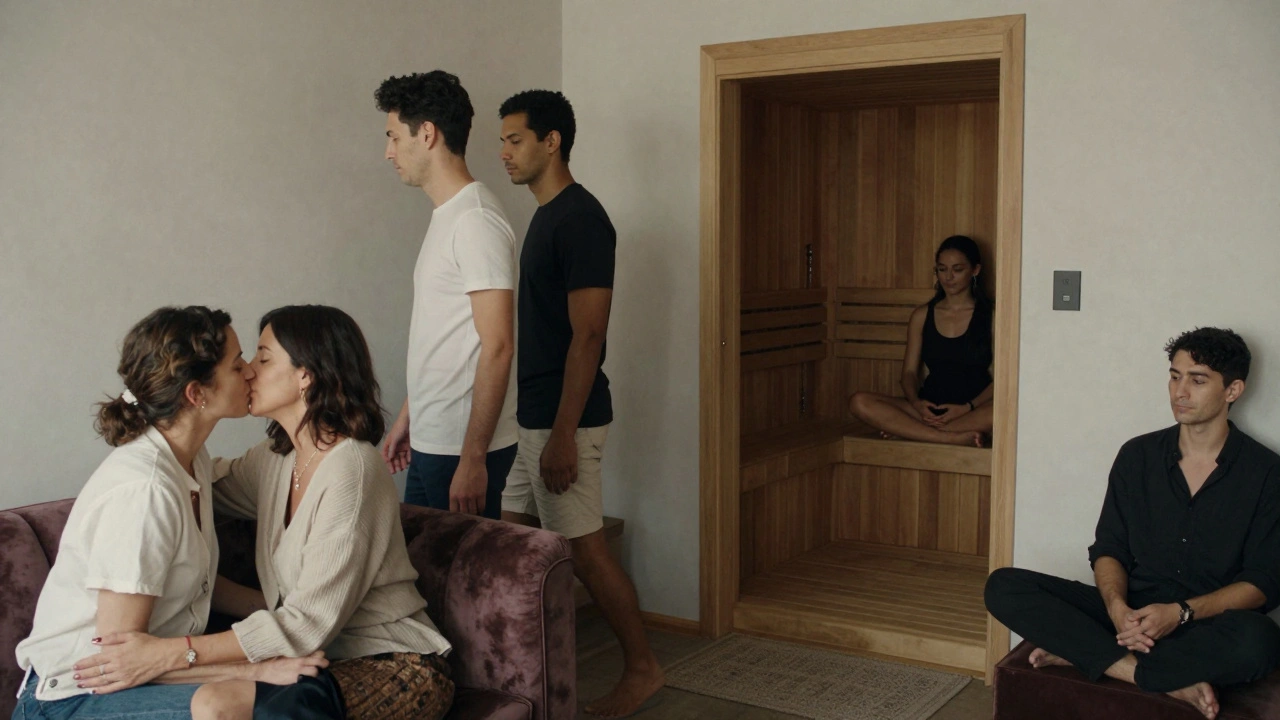
There’s no wild orgies in the center of the room. No one’s being filmed. Most activity happens in private rooms or semi-private corners. Some rooms have beds. Others have massage tables, showers, or even saunas. You’ll see couples kissing, people touching lightly, others just holding hands. It’s sensual, not sexual - unless both people agree to go further.
There’s a strict "no touch without consent" policy. If someone looks away or steps back, you stop. If you’re unsure, you ask. Simple. Staff members patrol quietly, watching for discomfort. They’ll intervene if someone seems pressured. The goal isn’t to shock - it’s to create a space where people feel safe being curious.
What should you wear?
Dress code varies by club. Some ask for "elegant casual" - think dark jeans, a nice top, heels or polished shoes. Others are more relaxed. But no sportswear, no hoodies, no flip-flops. You’re not going to a rave. You’re going to a space that values intention and presence.
Some people bring a change of clothes. Others bring a robe or towel. You’ll find lockers and private changing areas. The key is to feel comfortable in your own skin - literally and emotionally. If you’re self-conscious, that’s okay. Most people are. The environment is designed to ease that, not amplify it.
Is it legal in France?
Yes - but with limits. French law doesn’t ban private adult gatherings among consenting adults. What’s illegal? Prostitution (exchange of sex for money), public indecency, and non-consensual acts. These clubs stay legal by being private, membership-based, and strictly non-commercial. No money changes hands for sexual acts. No sex workers are employed. Everything is voluntary and mutual.
Police raids are rare, but they happen if someone reports a violation. That’s why clubs are so careful. They train staff to spot coercion, underage guests, or alcohol abuse. One club shut down in 2023 after a guest was found to be under 18 - even though they’d presented fake ID. The owners reported it themselves. That’s the standard.

What about safety? Are these places dangerous?
For most people, they’re safer than a crowded nightclub. There’s no violence. No aggression. No random strangers pushing you. Staff are trained in de-escalation. Security is visible but unobtrusive. You’re checked at the door - ID, sometimes a quick interview. No one gets in who looks suspicious.
But like any social space, you need to trust your gut. If someone makes you uncomfortable, walk away. Tell a staff member. You don’t need to explain why. The club’s priority is your safety, not your participation. Many visitors say the biggest risk isn’t physical - it’s emotional. Being around open sexuality can stir up feelings you didn’t expect.
What if you’re shy or inexperienced?
You’re not alone. Most first-timers are nervous. Some don’t even touch anyone the whole night. That’s fine. The clubs don’t expect you to perform. They expect you to be honest. If you say you’re new, people usually respond with kindness - not judgment.
Start by sitting in the lounge. Talk to someone. Ask questions. Watch how others interact. There’s no rush. Many people return three or four times before they feel ready to participate. One woman told me she came 11 times before she kissed someone. She said the 12th time felt like the first time she’d ever been truly seen.
What’s the difference between a sex club and a swingers’ club?
Swingers’ clubs focus on partnered sex - couples swapping partners. Sex clubs are broader. They include singles, non-monogamous groups, and people who just want to explore touch without sex. You might see a couple making out on a couch while someone else meditates in a quiet room nearby. There’s no single agenda.
Swingers’ clubs often have structured activities - "swap nights," "games," or partner exchanges. Sex clubs? No rules beyond consent. You’re free to be as involved or detached as you want. It’s more about personal exploration than social performance.
Can you go alone?
Yes - and many do. Solo visitors are common, especially among women. The clubs encourage it. There’s even a "solo welcome" program at some venues: a staff member will sit with you for the first 20 minutes, answer questions, and help you feel grounded.
Don’t expect to be hit on. That’s not the culture. People are there to explore, not to pick up. If someone approaches you, they’ll ask first - "Can I talk?" "Can I touch?" And they’ll accept "no" without hesitation. It’s refreshing, honestly. After years of dating apps and pressure, it’s a relief to be asked.
What if you’re in a relationship?
Couples come here all the time. Some want to spice things up. Others just want to see how the other feels about openness. A lot of couples say it deepens their connection - not because they had sex with others, but because they talked more openly about desire, boundaries, and trust.
But here’s the catch: you both have to agree. No surprises. No "I thought you’d be okay with this." Most clubs require couples to register together. If one person wants to go and the other doesn’t? You don’t go. That’s not just policy - it’s the foundation.
What’s the cost? Is it worth it?
Entry fees range from €30 to €80, depending on the club and whether it’s a special event. Some offer monthly memberships for €150-€300, which include discounts on drinks and events. Drinks are extra - wine, beer, and non-alcoholic options start at €8.
Is it worth it? That depends on what you’re looking for. If you want a wild party? No. If you want to understand human connection in a new way? Maybe. One man told me he came after his wife passed away. He didn’t want sex. He just wanted to be around people who weren’t afraid of touch. He said it helped him grieve.
What’s the vibe like after midnight?
It softens. The music gets quieter. The lights dim further. People start leaving. Those who stay are often in quiet conversations, wrapped in blankets, sipping tea. The energy shifts from curiosity to calm. It’s not about climax - it’s about presence.
Some clubs close at 2 a.m. Others stay open until dawn. You’re free to leave anytime. There’s no pressure to stay. No one checks your phone. No one asks why you came. You’re just… there. And that’s enough.
What should you bring?
- Valid ID (must be over 18)
- Comfortable, stylish clothes (no sportswear)
- A towel or robe (if you plan to use showers or saunas)
- Cash (some places don’t take cards)
- Open mind - and a clear sense of your boundaries
Leave your phone in your bag. Most clubs have lockers. No photos allowed - not even for yourself. This isn’t a place for Instagram. It’s a place for real life.
What’s the biggest mistake people make?
Thinking it’s about sex. It’s not. It’s about being seen. About touching without expectation. About saying "yes" to curiosity and "no" to pressure. The people who leave disappointed? They came looking for a thrill. The people who leave changed? They came looking for truth.
One woman told me, "I thought I was coming to have sex. I ended up crying in the corner because someone held my hand and asked if I was okay. I hadn’t been asked that in years."
Is this the future of intimacy?
Maybe. As dating apps grow colder and loneliness rises, people are craving real, unscripted connection. These clubs don’t promise love. But they do offer something rarer: permission. Permission to be curious. To be messy. To be human.
Paris has always been a city of contrasts. The Eiffel Tower and the back alleys. The Louvre and the underground jazz clubs. And now - this. A quiet rebellion against performance, in favor of presence.
Are sex clubs in Paris legal?
Yes, as long as they’re private, non-commercial, and based on mutual consent. French law allows adults to gather for consensual intimate activities in private spaces. No money can be exchanged for sex, and no public indecency is allowed. Clubs follow strict rules to stay within these boundaries.
Can I go to a sex club in Paris alone?
Yes, many people do. Solo visitors are welcome, especially women. Most clubs have staff who help newcomers feel safe. You’re not expected to participate in anything. You can just sit, observe, and take your time.
Do I need to be in a relationship to visit?
No. Singles, couples, and non-monogamous groups all attend. The focus is on personal comfort, not relationship status. You’ll find people of all backgrounds - married, divorced, single, queer, straight. Everyone is welcome as long as they respect the rules.
What if I feel uncomfortable during the visit?
You can leave at any time - no questions asked. Staff are trained to spot discomfort and will check in with you if they notice. You can also ask for a private space, a drink, or just to sit quietly. Your safety and comfort are the top priority.
How do I find a legitimate sex club in Paris?
Don’t search on Google or social media. Legitimate clubs don’t advertise publicly. Look for trusted forums or private Facebook groups where members share verified events. Many require a referral or application. If it sounds too easy or too flashy, it’s probably not real - or not safe.
Sex Club Paris isn’t about sex. It’s about what happens when people stop pretending. When they stop performing. When they finally let themselves be curious - without shame, without pressure, without a script.
It’s quiet. It’s messy. And for some, it’s the most honest place they’ve ever been.

I came across this post while researching for a trip to Paris next month, and honestly? It changed my whole perspective. I used to think these places were just about sex, but the part about people holding hands and asking if you're okay? That hit me hard. I’ve been lonely for years, and the idea of a space where you don’t have to perform just to be seen… I might actually go.
As someone who writes for a living, I appreciate the precision of this piece. The distinction between swingers’ clubs and sex clubs is nuanced but vital-and you articulated it with clarity. Also, the line about ‘permission to be curious’ is one of the most beautiful things I’ve read all year. Thank you for writing this without sensationalism.
Oh please. This is just vanilla social engineering dressed up as enlightenment. You’re telling me people pay €80 to sit around and ‘be present’? That’s not a sex club-that’s a therapy group with better lighting. If you’re not having sex, why even show up? This reads like a BuzzFeed article written by someone who’s never been inside one.
That woman who cried because someone held her hand… I’m crying right now. 😭
Why do we think intimacy has to be loud? Why does touch have to mean sex? This place sounds like the antidote to every dating app I’ve ever swiped on. I’m booking a flight.
So I went to one last year… just once. 😅
Wore my black dress. Didn’t touch anyone. Sat in the corner with a glass of wine and watched people laugh. One guy smiled at me and said ‘you look like you belong here’ and I almost cried. Not because I wanted to hook up. Because I felt… safe. Like I could breathe.
Still thinking about it.
This is the most over-glorified, New Age bullshit I’ve ever read. You call it ‘presence’? It’s just bourgeois guilt-displacement. People go there because they’re too afraid to be honest in their marriages, too bored to fix their lives, and too rich to admit they’re just lonely. You don’t need a velvet couch to feel seen-you need to stop running from your own fucking emotions. This isn’t revolution. It’s retail therapy for the soul.
While the article presents a compelling narrative, it is imperative to underscore the legal and ethical boundaries underpinning such establishments. Under Article 222-23 of the French Penal Code, consensual adult activity in private is indeed lawful, provided no commercial exchange occurs. However, the absence of public advertising does not absolve operators from due diligence regarding age verification and consent protocols. One must also consider the psychological implications for vulnerable individuals who may misinterpret the environment as permissive in all dimensions. Caution, not curiosity, should be the guiding principle.
My wife and I went last year. Didn’t do anything. Just talked. Sat. Held hands. Left at 1 a.m.
Best night we’ve had in five years.